

The wheels fitted to a work ute from the factory are a compromise. They are engineered to meet a broad range of owner needs, to keep the purchase price competitive, and to satisfy compliance requirements across multiple markets.
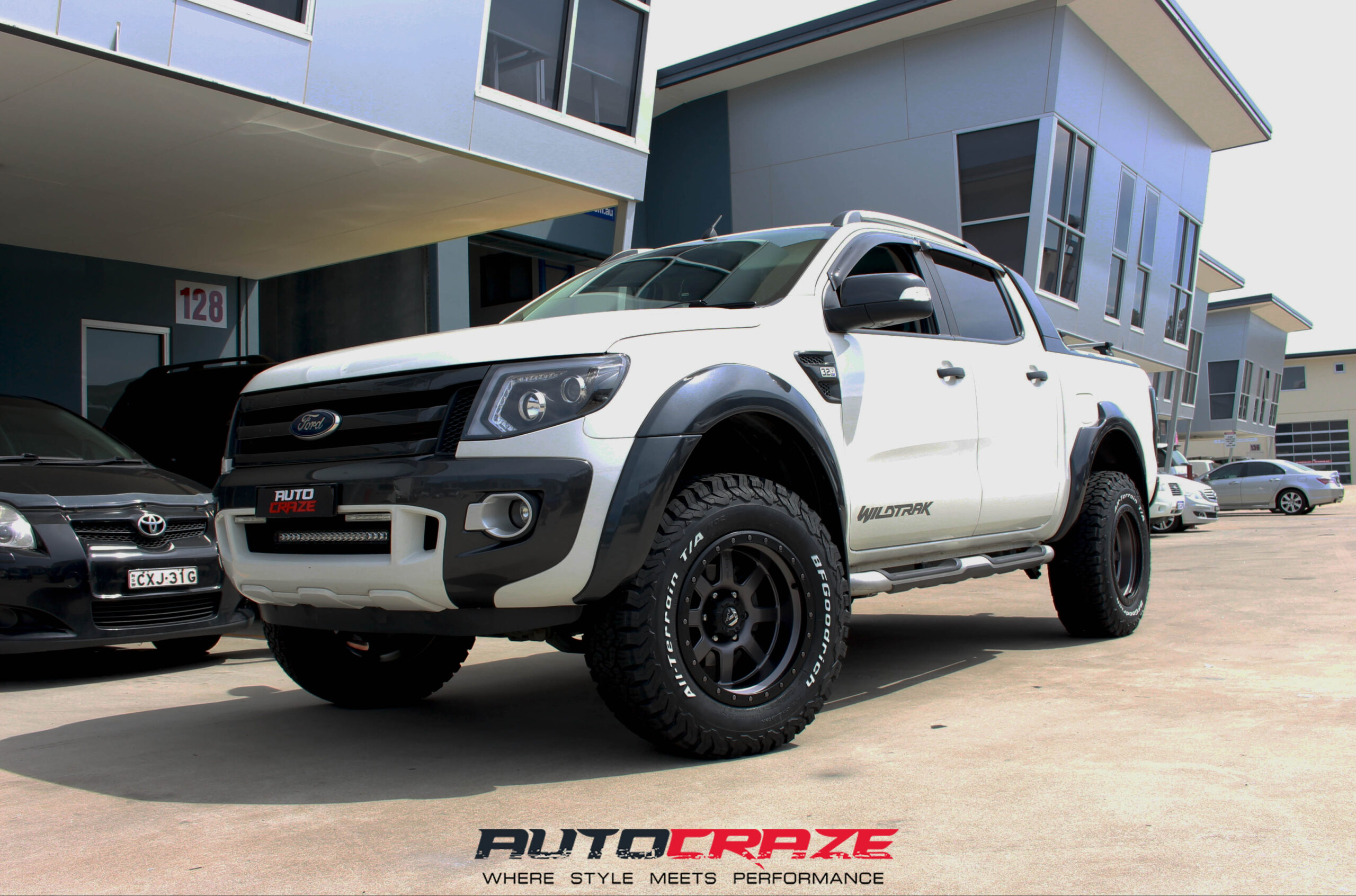
For Australian tradies, farmers, and outdoor workers who push their utes to the limits those vehicles were designed to handle, factory wheels are rarely the optimal long-term choice. Upgrading to purpose-suited aftermarket wheels improves both the performance and the visual presence of the vehicle, and the Australian market for ute wheel upgrades has never offered more options across more price points than it does today.
What Actually Matters When Choosing Ute Wheels
Before selecting a wheel, understanding the technical parameters that govern compatibility is essential. Getting any of these wrong means a wheel that physically cannot be fitted safely.
Bolt pattern. Each ute manufacturer uses a specific bolt pattern that determines how the wheel attaches to the hub. The Ford Ranger and Volkswagen Amarok share a 5×120 pattern. The Toyota HiLux and LandCruiser 79 Series use 6×139.7. The Isuzu D-Max uses 6×139.7. The Mitsubishi Triton uses 6×139.7. Selecting a wheel with the wrong pattern means it cannot be mounted regardless of other specifications.
Offset. The offset of a wheel determines how far it sits inward or outward relative to the hub face. A low or negative offset pushes the wheel out toward the guard, which is desirable for a wider stance but must stay within the manufacturer’s specified range to avoid guard clearance issues, bearing load problems, and compliance concerns under Australian road rules.
Load rating. Work utes carry loads, often significant ones. The load rating of a wheel must match or exceed the rated capacity for the vehicle at the relevant axle position. Selecting a wheel with an insufficient load rating for a vehicle that regularly carries heavy payloads is a safety issue, not merely a technical one.
The aftermarket wheel sector in Australia has grown significantly alongside the ute market itself, with Australian consumers consistently among the most active in modifying their vehicles compared to equivalent markets elsewhere.
Alloy vs Steel: Choosing the Right Material for Your Work
The choice between alloy and steel wheels is one of the first decisions ute owners face, and the right answer depends genuinely on how the vehicle is used.
Steel wheels are heavier, less visually impressive, and more susceptible to corrosion. They are also significantly cheaper, easier to repair in the field, and more resistant to damage from rocks, creek crossings, and corrugated dirt roads. For genuine work utes that spend time on stations, construction sites, or fire tracks, steel wheels remain a practical choice.
Alloy wheels offer weight reduction over steel, which reduces unsprung mass and can improve ride quality and fuel economy. Modern alloy wheels produced for the ute market are considerably more durable than earlier counterparts, and flow-forming manufacturing processes have produced alloys that combine strength with reduced weight more effectively than cast wheels of comparable size. For dual-purpose utes that do serious work but also spend time on road, a quality alloy is increasingly the practical and aesthetic choice.
The team at car wheels at AutoCraze stocks an extensive range of aftermarket wheels specifically suited to Australian work utes, with expertise in fitment across the major ute platforms. A representative noted: “Most of our ute customers are not buying wheels purely for looks. They want something that performs better in real-world conditions than the factory fitment, holds up to hard use, and still looks the part when the ute is doing the school run on Friday.”
The Most Popular Ute Platforms and Their Wheel Options
Several of the most popular work utes in Australia have a particularly well-developed aftermarket wheel ecosystem worth knowing about.
Ford Ranger. The current generation Ranger’s 5×120 bolt pattern is increasingly well-served by the aftermarket, and wheel manufacturers have responded to the platform’s enormous popularity with a wide range of options. The Ranger’s relatively conservative factory wheel sizes leave significant room for upgrading to larger diameters without requiring suspension modifications in most configurations.
Toyota HiLux. The HiLux’s 6×139.7 bolt pattern is one of the most common in the Australian ute market. Which means maximum choice in the aftermarket. Decades of accumulated community wisdom make researching the right combination straightforward.
Isuzu D-Max. The current D-Max’s combination of high factory ride height and proven off-road architecture. Makes it popular with buyers who want wheel upgrades. That genuinely improve off-road capability rather than just visual presence.
A review of the current Australian ute market highlights the ongoing dominance of the ute segment in Australian vehicle sales and the corresponding growth in owner modification activity.
Tyre Pairing: Getting the Combination Right
A wheel upgrade that does not consider the tyre simultaneously is an incomplete decision.
- The overall diameter of the wheel-and-tyre combination,
- the aspect ratio of the sidewall, and
- the tyre’s load and speed rating
- all interact with the wheel selection in ways that affect both performance and compliance.
For work utes that operate on a mix of road and off-road terrain. An all-terrain tyre on an appropriately sized alloy represents the most popular combination. Modern all-terrain tyres have improved dramatically. In terms of road noise and handling compared to older designs. Making the on-road compromise far less significant than it was a decade ago.
Load-rated tyres matched to the ute’s GVM requirements are essential for vehicles that regularly carry near-maximum payloads. Tyre load ratings are the component most commonly overlooked by buyers focused on aesthetics. And the consequences of under-specifying this parameter for a working vehicle are genuinely serious.
Selecting the right wheels for an Australian work ute is a meaningful decision with real performance consequences.
- Getting the technical parameters right,
- choosing materials suited to the actual use case.
- And pairing with an appropriate tyre
- produces a combination that outperforms factory fitment in every condition the vehicle was designed to handle.