

For anyone who drives outside the major cities, an animal strike is not a remote possibility but an ordinary part of the risk. Kangaroos, wallabies, wombats, emus, and livestock all share the roads with vehicles. Collisions can cause serious injuries, expensive damage, and in some cases fatal crashes. Understanding how these incidents happen is the first step towards reducing the harm they cause.
When and Where Strikes Are Most Likely
Most animal strikes occur around dawn and dusk, when many native animals are most active and when low light makes them harder to spot. Rural and regional roads carry the highest risk, particularly where bushland, farmland, and water sources sit close to the road. Seasonal patterns also play a part: during dry spells, animals are drawn to the green growth at the roadside, and in breeding seasons they can be more mobile and less predictable.
The Bureau of Infrastructure and Transport Research Economics, available at bitre.gov.au, publishes national road safety data, and regional roads consistently account for a disproportionate share of serious crashes. Animal strikes are one contributing factor in that picture, alongside speed, fatigue, and the long distances many people travel.
What Happens in a Collision
A strike at highway speed delivers a lot of energy. A large kangaroo can weigh as much as a fully grown adult, and when the animal is thrown onto the bonnet or windscreen, the results can be severe. Even if the occupants are unharmed, the vehicle can sustain damage to the radiator, the headlights, the bonnet, and the cooling system, which can leave a driver stranded a long way from help.
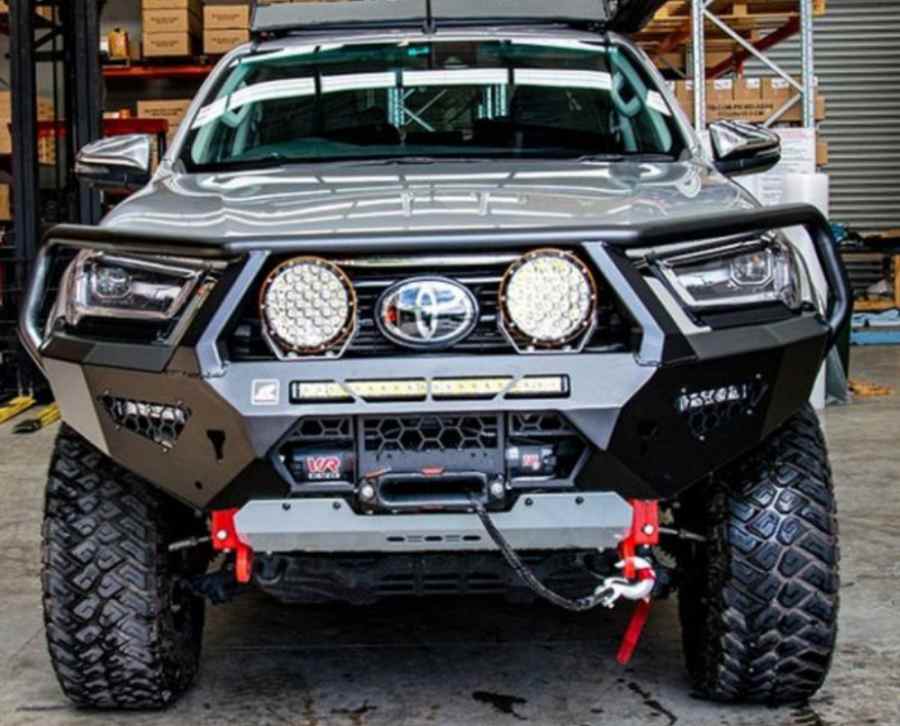
The front of a modern vehicle is designed to crumple in a controlled way, and it is not built for repeated impacts with large animals. That is where protective equipment comes in. A bar designed with animal strikes in mind aims to shield the vulnerable parts at the front of the vehicle, such as the radiator and lights, and to deflect the animal rather than allowing it to ride up onto the windscreen.
Where an Animal-Focused Bull Bar Fits
Owners shopping for an offroad animal bull bar are usually looking for a design that prioritises coverage and strength over styling. Features worth looking for include a sturdy loop or bash plate to protect the radiator area, strong mounting points tied into the chassis, and a design that preserves the vehicle’s sensors and airbag function.
It is worth being realistic about what a bar can do. It reduces damage and can keep a vehicle drivable after a strike. But it does not make a collision harmless. And it does not remove the need for careful driving. A bar should be seen as one layer of protection among several.
Driving Habits That Make the Biggest Difference
The most effective protection is not hardware but behaviour. Slowing down at dawn and dusk gives more time to react and reduces the energy of any impact. Scanning the roadside as well as the road ahead helps spot animals before they move. Using high beam where it is safe to do so extends the distance at which eyes reflect the light.
If a collision is unavoidable, the safest response is usually to brake firmly and stay in the lane rather than swerving. Swerving at speed can lead to a rollover or a head-on crash. Which is typically far worse than hitting the animal. Drivers should also avoid driving long distances in the hours around sunrise and sunset when possible, particularly on unfamiliar roads.
Fatigue plays a quiet but important role. A tired driver reacts more slowly and is less likely to notice movement at the edge of the road. So regular breaks on long rural drives are a practical safeguard. Repair bills add to the case for caution as well. A cracked radiator, a damaged intercooler, and replacement lights and panels can quickly add up to a very large cost. Which is why many rural drivers treat protection as a way of saving money rather than an indulgence.
Post collision – what to do
After any collision, pull over safely, turn on hazard lights, and check for injuries. Inspect the vehicle for fluid leaks, a damaged radiator, or broken lights before continuing. Since driving a vehicle with a cooling system leak can quickly destroy an engine. If an animal is injured, contact the local wildlife rescue service or authorities rather than approaching it yourself.
General background on the wider issue of animals killed on roads is covered on Wikipedia,. Which outlines how road design, fencing, and wildlife crossings are used around the world to reduce the problem. For Australian drivers, combining sensible habits with well-chosen protective equipment remains the most practical way to stay safe on roads shared with wildlife.